How to Fall Asleep Faster (Without Stressing About It): My Personal Guide + Tips, Checklist & Helpful Products
I used to be terrible at falling asleep. I’d lie in bed waiting for my thoughts to quiet, playing mental reruns of everything I forgot to do. My phone would be in my hand. My anxiety turned up. And before I knew it, an hour—sometimes two—had slipped by, and I felt exhausted and frustrated.
If that sounds familiar, friend, you’re not alone. I’ve learned that sleeping faster isn’t about willpower or pretending to be a “good sleeper.” It’s about creating a supportive nighttime environment, calming your nervous system, and giving your body the cues it needs to relax.
Here’s my complete, cozy guide to falling asleep faster — including tips I swear by, a big checklist you can follow tonight, and thoughtful product ideas that help make bedtime something you look forward to (yes, really).
Affiliate links may be used in this post, and if so, I will receive a commission at no extra cost. I’m also part of the Amazon Affiliate (Associate) program, where I earn a commission from sales made through my affiliate links. Read the full disclosure policy.
Why Falling Asleep Fast Matters (More Than You Think)
We live in a go-go world. Productivity is celebrated. We scroll late, stress early, and treat sleep like something to be fit in rather than a foundation we build our lives on.
But sleep is one of those things that affects everything — mood, energy, immune system, digestion, memory, focus, creativity… you name it.
When you fall asleep faster:
- You get more actual sleep
- You wake up feeling more rested
- You reduce late-night anxiety
- You improve overall health long term
- You don’t waste time lying awake, worrying
Falling asleep fast doesn’t have to be a mystery — it’s mostly about habits and environment — and you can totally improve it with some simple shifts.
How My Sleep Changed: A Little Backstory
I used to fight sleep every night. Even when I was exhausted, my brain would stay alert. I’d scroll social media or check emails “just one last time.” I’d replay the day’s events. I’d plan the next day. Instead of sleep, I created a late-night stress loop.
Over time, I realized the problem wasn’t a lack of tiredness. It was a lack of readiness. My body was tired — but my nervous system wasn’t ready to chill out.
So I changed the way I approached sleep.
I didn’t try to force sleep. I stopped doing things that signaled “work” or “stimulate me” right before bed. I started small. I changed my environment. I added calming routines. I gave my brain gentle cues that bedtime wasn’t a battleground — it was a peaceful transition.
The difference? Night and day.
Now, most nights I fall asleep within 20–30 minutes of getting into bed. Some nights even faster. And the best part? I enjoy bedtime again.
My Top Tips for Falling Asleep Faster
These are the tips I use most often — and they’re all things you can start tonight.
01. Create a Sleep “Wind-Down” Routine
Your body learns habits. That’s why brushing your teeth signals bedtime — it’s a cue.
About an hour before bed, start a gentle routine:
- Dim the lights
- Turn off bright screens
- Do something calming (read, journal, stretch)
- Sip something warm and caffeine-free
- Breathe deeply
Over time, this routine tells your brain: “Sleep time is coming.”
02. Ditch Screens 30–60 Minutes Before Bed
This is huge. Blue light from phones and laptops tells your brain it’s daytime — even if it’s 11 p.m. That delays melatonin (your sleep hormone).
I know screens are tempting — honestly, it’s hard! But even starting with 15–20 minutes less screen time can make a noticeable difference.
03. Keep Your Bedroom Cool and Dark
Your body’s internal thermostat drops when it’s time to sleep — a cooler room helps speed that up.
Aim for:
- ~65–68°F (18–20°C)
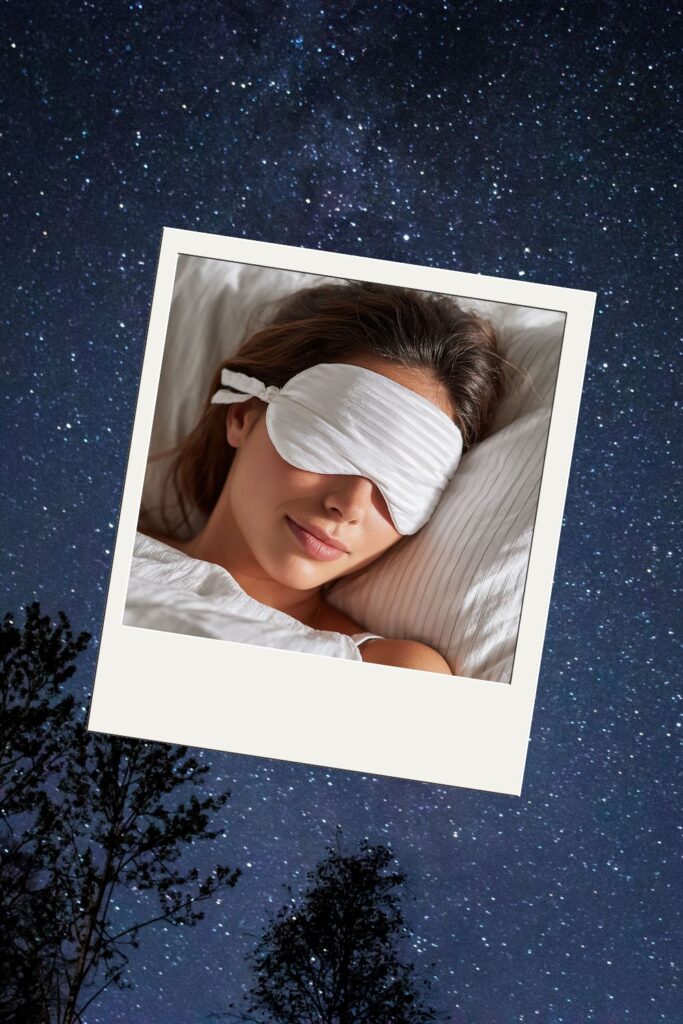
- Blackout curtains or an eye mask
- Minimal lights — even alarm clock glow
Darkness tells your body melatonin production can go up.
04. Practice Gentle Breathing or Relaxation
When my mind is buzzing, slowing my breath slows my thoughts.
One method I love:
- Inhale for 4 seconds
- Hold for 2
- Exhale for 6
Repeat 5–10x
It’s simple, quiet, and effective.
05. Journal Before Bed
Sometimes I can’t sleep because my brain is running a mental to-do list.
Writing thoughts down — especially worries or tomorrow’s reminders — gets them out of my head so my brain isn’t stuck replaying them.
06. Watch What You Eat + Drink Before Bed
Caffeine late in the day = restless sleep. So I avoid coffee after early afternoon, and I watch heavy meals or sugary snacks before bed. (Seriously, I can tell a huge difference when I let slide the caffeine rule!)
If I’m hungry before bed, I choose something light and sleep-friendly, like:
- Warm milk or herbal tea
- A small banana
- A handful of almonds
07. Be Consistent (Even On Weekends)
Your body loves rhythm. Going to bed and waking up at similar times keeps your circadian rhythm steady — and helps you fall asleep faster.
I aim for consistency even on weekends — not perfectly, but close.
08. Get Daylight + Movement in the Morning
Your internal clock is influenced by light. Morning sun tells your body when daytime begins and when nighttime should follow.
Even a short walk after breakfast helps reset your clock so that at night, sleep arrives more efficiently.

What To Do If You Can’t Sleep Once You’re in Bed
Sometimes — even with a routine — sleep doesn’t come right away. Here’s my gentle plan for those nights:
Don’t Stress
Stressing about “not sleeping” makes the problem worse.
Tell yourself:
“It’s okay. I’m resting, and that’s good enough.”
Even rest counts.
Get Out of Bed If You’re Not Sleeping
If it’s been 20–30 minutes and you’re still awake, get up.
Sit somewhere quiet. Read something calm. Do light stretching. Then try again.
Your bed should be for sleeping — not battlefields or stress.
Try a Calming Audio or Guided Sleep Meditation
Sometimes just listening to a calm voice or ambient sound helps.
I’ll link product ideas later, but there are lots of gentle audio sleep guides that work great.
A Sleep Reset Checklist (Printable & Practical)
Here’s your step-by-step checklist to follow tonight or any night you want to fall asleep faster:
Evening Routine (1–2 hours before bed)
☑ Dim lights in living spaces
☑ Start winding down screen use
☑ Do a relaxing activity (reading, gentle stretching, journaling)
☑ Sip a warm caffeine-free drink
☑ Avoid heavy meals and caffeine
Bedtime Environment
☑ Room temperature 65–68°F
☑ Blackout curtains or eye mask
☑ Comfortable bedding
☑ White noise or calming sound if needed
☑ Phone on silent and out of reach
In Bed
☑ Deep breathing (4-2-6 pattern)
☑ No clock checking
☑ If awake after 20 minutes → get up gently and reset
Morning Routine
☑ Get natural light within 1 hour of waking
☑ Move your body (walk, stretch, gentle exercise)
☑ Keep a consistent wake time
My Favorite Products That Help Me Sleep Faster
Here are some things I’ve tried and found helpful — from cozy bedtime aids to gadgets that genuinely smooth the path to sleep:
Calming Pillows + Bedding
Your pillow and sheets matter. When your head and body feel comfortable without tension, your nervous system relaxes quicker.
- Memory foam pillow (contours to your head & neck)
- Weighted blanket (helps calm the nervous system)
- Breathable, soft sheets (temperature regulation is key!)
Sleep Sounds & Guided Audio Tools
Sound can be a game changer — especially for busy minds.
- White noise machines
- Nature sound machines (rain, ocean, forest)
- Apps with guided sleep meditations
- Headphones designed for sleep (flat speakers, comfy for side sleepers)
Calming Aromatherapy
Certain scents help your nervous system relax.
- Lavender spray for pillows
- Essential oil diffuser with calming blends
- Scented candles before bedtime (blow them out before sleep!)
Caffeine-Free Sleep Teas
A warm drink signals “rest time” to your body.
- Chamomile tea
- Valerian root blends
- Lemon balm and passionflower mixes
Relaxation Kits & Tools
- Gentle stretch bands for bedtime relaxation
- Eye masks (weighted or silk)
- Breathwork tools or apps

When Falling Asleep Fast Might Need Extra Support
Sometimes poor sleep isn’t just about habits or environment — there might be other factors like stress, anxiety, medical issues, or restless sleep disorders.
If:
- You consistently fall asleep late and
- You wake up frequently at night or
- You feel exhausted even after sleep
It might be worth talking to a healthcare provider.
There’s no reason to suffer in silence — sleep is a basic human need, not a luxury.
What I Wish Someone Told Me Years Ago
If I could whisper one thing to my past self — and to you — it would be this:
Falling asleep is a skill, not a flaw.
Just like learning to knit, cook, or drive a car, you get better with practice, consistency, and the right tools.
And there’s nothing wrong with needing help — whether that’s a cozy pillow, a guided meditation, or somber evenings spent without a screen.
Sleep isn’t a reward. It’s a necessity. And the more you care for it, the more energized, present, and joyful your days will become.
My Final Encouragement
Start small. Start tonight.
Choose one or two tips from this article. Try them. Notice what feels good. Notice what helps. Don’t worry about perfection.
Your body wants to sleep. It really does. You don’t have to wrestle it into submission. You just have to help it relax.
And your rest is worth the effort.