Easy Watercolor Art Ideas: Painting Small
When I first started watercoloring, I felt completely overwhelmed. There were so many techniques, supplies, and styles that I didn’t even know where to begin. If you are feeling that way too, I want to gently tell you something that changed everything for me. Start small.
Painting small is one of the easiest and most encouraging ways to learn watercolor. It takes the pressure off, keeps things manageable, and lets you practice more often without feeling like you are committing to a huge, intimidating piece.
Let me walk you through why painting small works so well, how it helped me grow, and how something called ACEO art can even turn your little paintings into a way to start selling your work.
More to read:
- Hobbies for Women in Their 20s To Try This Year
- 27 Summer Holiday Hobbies to Try This Season (and Fall in Love With Your Days Again)
- Cozy Hobbies for Women: 75 Relaxing Ideas to Slow Down and Enjoy Life
- 75 Cool Girl Hobbies to Try This Year
Affiliate links may be used in this post, and if so, I will receive a commission at no extra cost. I’m also part of the Amazon Affiliate (Associate) program, where I earn a commission from sales made through my affiliate links. Read the full disclosure policy.
Why I Love Painting Small as a Beginner
When I started painting, I made the mistake of jumping into full sized sheets of watercolor paper. I would sketch something out, spend hours on it, and then feel frustrated when it didn’t turn out the way I imagined.
Once I switched to smaller pieces, everything changed.
Painting small helps because:
- It feels less overwhelming
- You can finish a piece quickly
- You get more practice in less time
- Mistakes feel less “expensive”
- It builds confidence faster
Instead of pouring all my energy into one big painting, I could create five or six small ones in the same amount of time. That repetition is where real growth happens.
Small paintings also make it easier to experiment. I started trying new color combinations, different brush techniques, and even styles I would have been too nervous to attempt on a larger piece.
The Perfect Small Format: ACEO Art
One of my favorite discoveries early on was ACEO art.
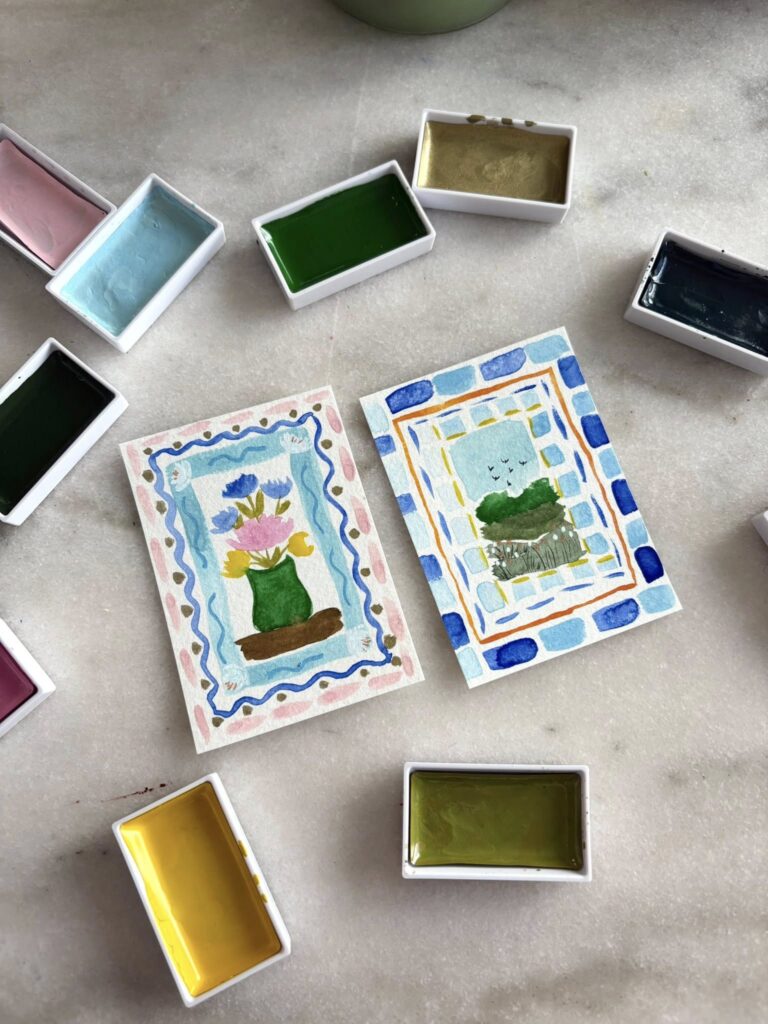
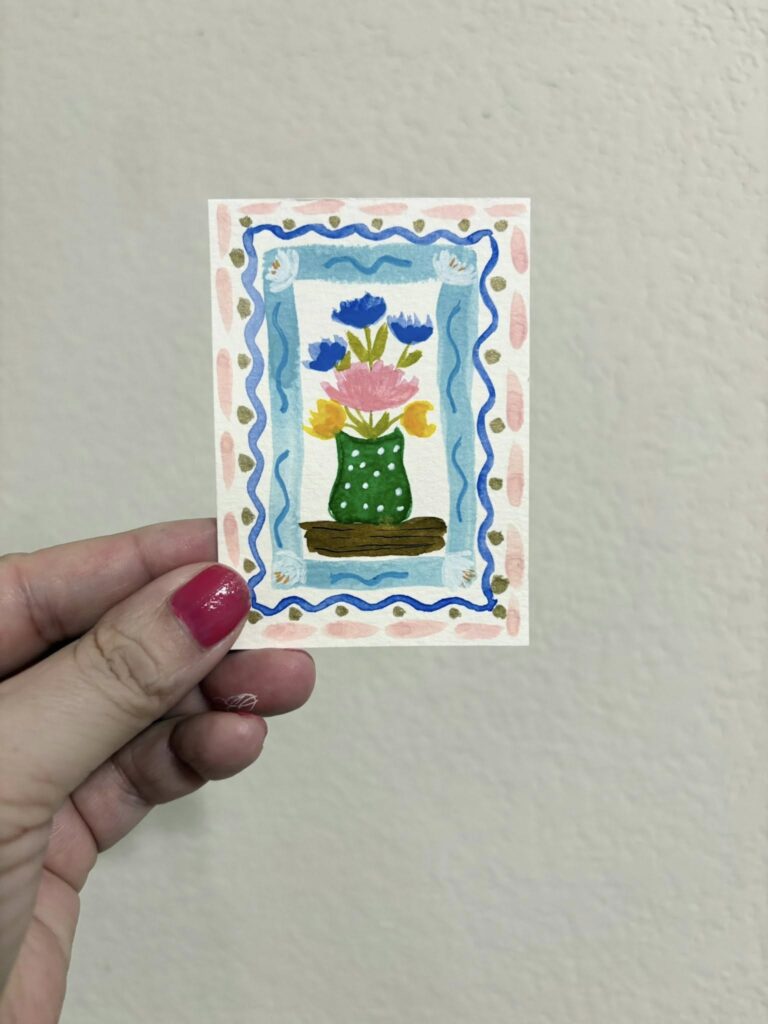
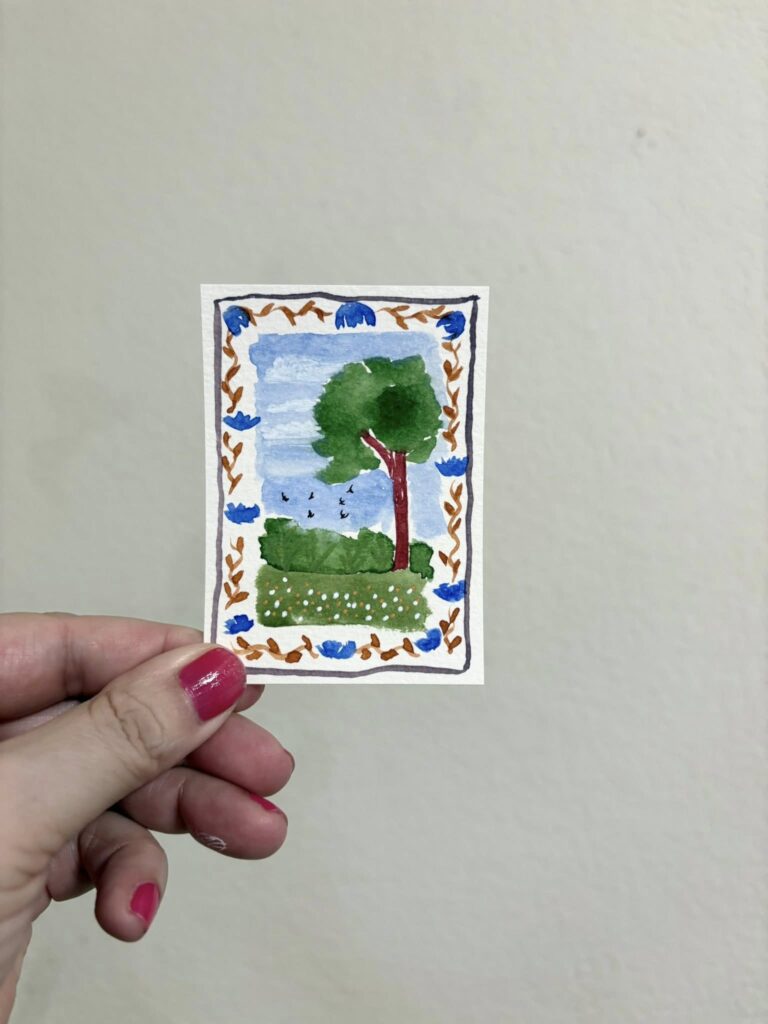
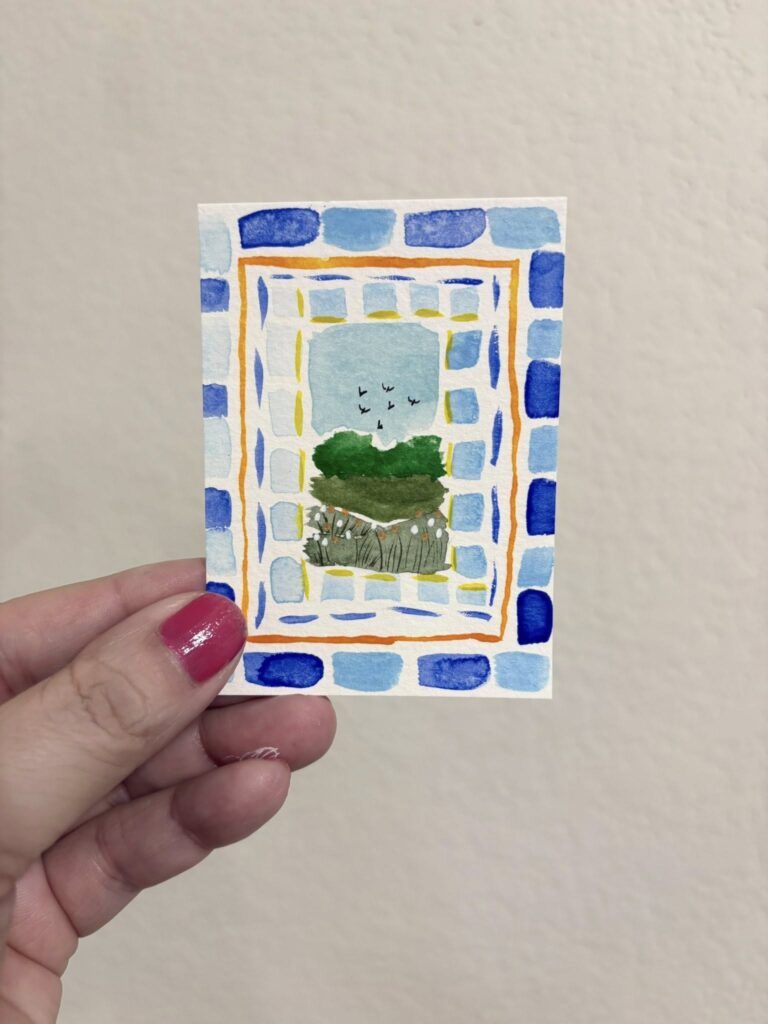
ACEO stands for Art Cards, Editions, and Originals. These are tiny pieces of art that measure 2.5 x 3.5 inches, the same size as a trading card.
At first, I loved them simply because they felt doable. A tiny canvas is much less intimidating than a full sheet of paper. But then I realized something even better. They are also a wonderful way to begin selling your art.
Here is why I think ACEOs are perfect for beginners who want to grow into selling:
- They are quick to create
- They use very little paint and paper
- They are affordable for buyers
- They are easy to photograph and list online
- They are simple to ship
You do not need a huge portfolio or years of experience to start. You can begin with a handful of small pieces and learn as you go.
I also love that collectors enjoy ACEOs. Some people specifically collect these little artworks, which makes them a fun and approachable entry point into the art world.
Themes and Styles You Can Explore in Small Watercolor Paintings
One of the best parts of working small is how easy it is to try different styles. You can treat each piece like a mini experiment.
Here are some of the styles I played with when I was learning, and honestly, I still rotate through these depending on my mood.
Whimsical Watercolor
This is one of my absolute favorites.
Whimsical painting is all about imagination and charm. Think tiny cottages, soft florals, floating teacups, little animals with personality, or dreamy skies.
When I paint whimsical pieces, I let go of perfection. I focus on soft colors, playful details, and a slightly storybook feel.
This style is perfect if you love cozy, cottagecore, or fairytale inspired art.
Realistic Watercolor
If you enjoy detail and observation, realistic watercolor is such a satisfying challenge.
You can paint:
- Flowers
- Fruits
- Birds
- Landscapes
- Everyday objects
Working small actually makes realism feel less intimidating. You are not trying to render an entire scene, just a tiny portion of it.
I found that painting a single strawberry or a small leaf taught me more than trying to paint a whole garden.
Playful and Cute Illustrations
This style is lighthearted and fun.
Think:
- Smiling animals
- Cute food illustrations
- Little characters
- Seasonal doodles
This is a great style if you are interested in creating products later like stickers, greeting cards, or children’s art.
I loved using bright colors and simple shapes here. It helped me loosen up and enjoy the process without overthinking.
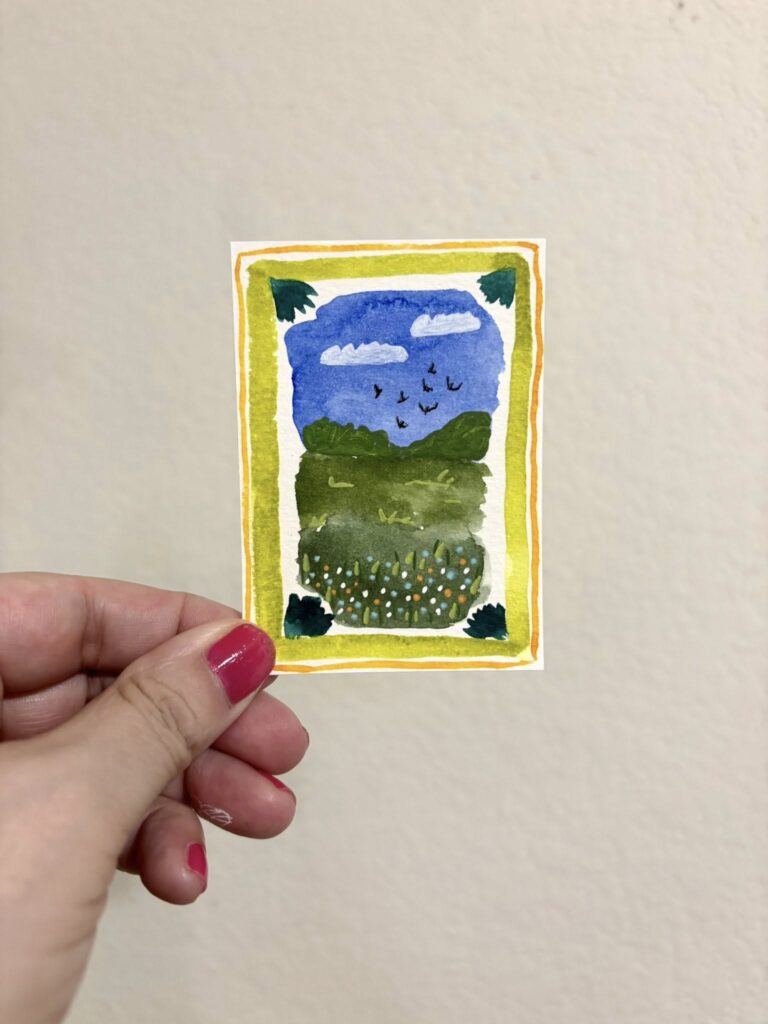
Illustrative Watercolor
Illustrative watercolor sits somewhere between whimsical and structured.
You might create:
- Botanical illustrations
- Recipe cards with painted ingredients
- Storybook style scenes
- Minimal line art paired with watercolor
This style is beautiful for blog graphics, printables, and digital products, which I know is something many of us are interested in.
Abstract Watercolor
Abstract painting is such a freeing place to start if you feel stuck.
There are no rules.
You can:
- Play with color blending
- Layer washes
- Add splatters or textures
- Experiment with shapes and movement
Some of my earliest abstract pieces taught me how water and pigment interact, which is one of the most important parts of watercolor.
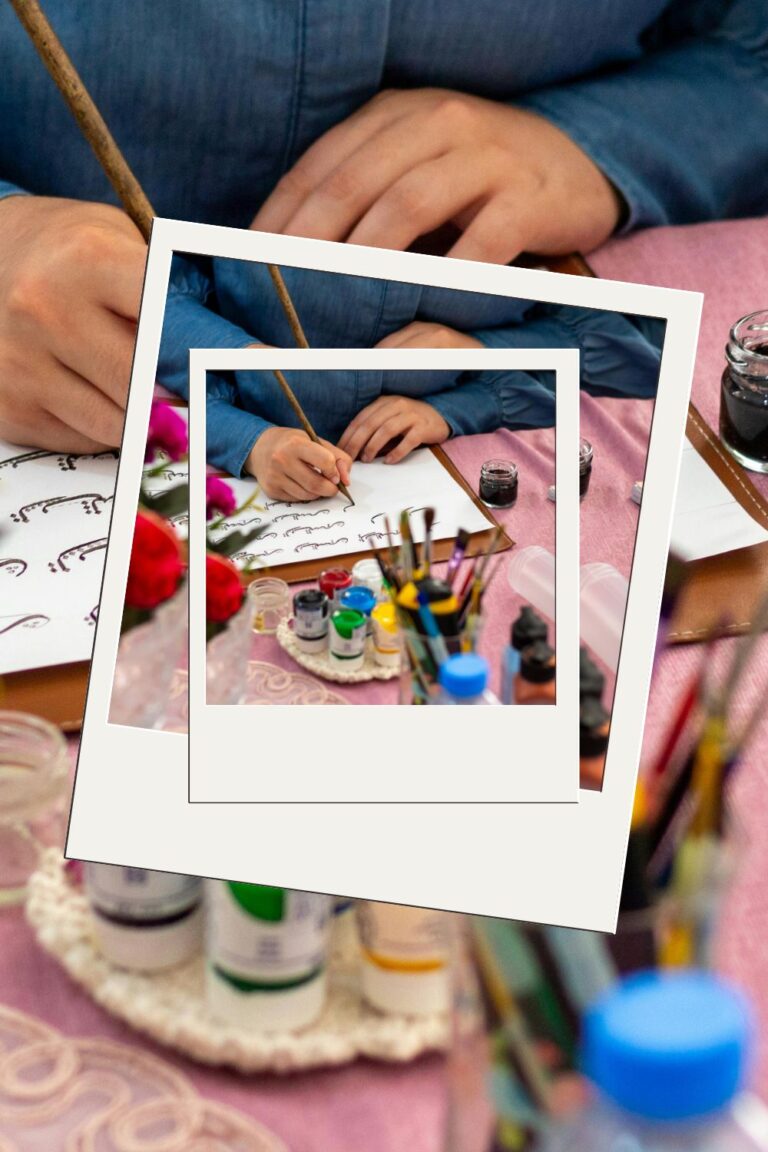
Basic Supplies I Use for Small Watercolor Painting
You do not need a huge collection of supplies to get started. In fact, keeping it simple makes learning easier.
Here is what I personally recommend:
Watercolor Paper
- Look for 140 lb or 300 gsm paper
- Cold pressed is a great starting point
- You can cut larger sheets down into small pieces or ACEO size
Watercolor Paints
- A basic pan set or a few tubes is enough
- Start with a small palette of colors and mix your own
Brushes
- A round brush in size 2, 4, or 6 works beautifully for small paintings
- You really do not need a large variety at the beginning
Water Container
- Any jar or cup works
Paper Towels or Cloth
- For blotting and controlling water
Palette
- A simple plastic or ceramic palette for mixing colors
That is truly all you need to begin.
Optional Supplies That Can Add Fun Details
Once you get more comfortable, you might enjoy adding a few extras:
- Waterproof fineliners for line work
- White gel pen for highlights
- Masking fluid for preserving white areas
- Colored pencils for mixed media touches
I like to add these little details especially when I am working on whimsical or illustrative pieces.
Supplies You Will Need If You Want to Ship Your Art
If you decide to sell your small watercolor paintings or ACEOs, shipping is actually very simple, which is one of the reasons I love this format so much.
Here is what I use:
Protective Sleeves
- Clear plastic sleeves keep the artwork safe from moisture
Backing Boards
- Thin chipboard or cardstock to keep the painting from bending
Rigid Mailers or Envelopes
- Small rigid mailers are perfect for ACEO size pieces
Thank You Cards or Branding Inserts
- A small personal touch goes a long way
Labels and Postage
- You can print these from home or use your local post office
Because the artwork is small and lightweight, shipping costs are usually low, which makes it easier to price your work in a beginner friendly way.
Why This Approach Builds Confidence So Quickly
I cannot say this enough. Painting small helped me stay consistent.
Instead of waiting for the perfect time to sit down and create something big, I could paint one tiny piece in 20 to 30 minutes. That made it easier to show up daily or at least a few times a week.
Over time, those little paintings added up.
I started to see improvement in:
- Brush control
- Color mixing
- Composition
- Confidence in my own style
And before I knew it, I had a collection of work I was actually proud of.
If You Want to Become a Paid Artist
If that is something on your heart, I want you to know it does not have to be complicated.
Starting small with watercolor and ACEO art can be a gentle and realistic way to step into selling your work.
You can:
- List a few pieces on Etsy
- List on eBay (there’s a big market for ACEOs there)
- Share them on Instagram or Pinterest
- Offer limited sets or themed collections
- Slowly build your confidence and audience
You do not need to wait until you feel like an expert.
You just need to start.
A Little Encouragement From Me to You
If you are brand new to watercolor, give yourself permission to keep it simple.
Paint small. Try different styles. Let your paintings be imperfect. Let them be playful.
Some of my favorite pieces are the ones that felt the least planned.
And who knows. Those tiny little paintings might be the very thing that opens the door to something bigger than you ever expected.
Just start with one small brushstroke.